

About the Commission
The Mountain Lakes Environmental Commission (EC) is a volunteer municipal advisory board that works to protect our natural resources, with a focus on resource planning, environmental protection and open space. We advise the Borough Council, the Planning Board and the Zoning Board of Adjustment on environmental issues, and help residents care for our lakes, woods and open space. Our meetings are open to everyone. Interested in joining? Come to a meeting or email us.
What we do:
- Advise the Planning Board and Zoning Board of Adjustment on the environmental impact of development proposals
- Investigate environmental and natural resources issues and recommend solutions
- Inform residents on environmental matters and ways to help protect the environment
- Develop the Environmental Resource Inventory (ERI), explained in its own section below
- Work with neighboring commissions and regional groups, and alongside the Green Team
Commission Members
- Robert Platt, Chair (12/31/28)
- Daniel Gates (12/31/26)
- Cynthia Korman (12/31/27)
- Mimi Kaplan (12/31/26)
- Scott Dubnoff (12/31/28)
- Andrew Sylvester (12/31/28)
- Pawan Gaitonde (12/31/27)
- Milan Sheth, Alternate #1 (12/31/27)
- Charlotte Caggiano, Student Representative
- Samantha Hirschfeld, Student Representative
Term end dates in parentheses.
Contact: MLEC@mountainlakes.gov
2026 Meeting Minutes
- September 16, 2026
- July 15, 2026
- June 17, 2026
- May 20, 2026
- April 8, 2026
- March 17, 2026
- February 17, 2026
- January 20, 2026
-
Archive: 2005 to 2025
2025: Nov 19 · Oct 21 · Sep 16 · Aug 19 · Jun 17 · May 20 · Apr 15 · Mar 25 · Feb 18 · Jan 21
2024: Dec 17 · Nov 19 · Oct 15 · Aug 20 · May 21 · Apr 16 · Mar 19 · Feb 20 · Jan 23
2023: Dec 19 · Nov 14 · Oct 24 · Sep 18 · Aug 22
2022: Jun 21 · May 17 · Apr 19 · Mar 15 · Feb 15 · Jan 18
2021: Dec 14 · Nov 16 · Oct 26 · Sep 21 · Aug 17 · Jun 15 · May 19 · Apr 20 · Mar 16 · Feb 16 · Jan 19
2020: Dec 15 · Nov 17 · Oct 20 · Sep 22 · Jul 21 · Jun 17 · May 19 · Apr 21 · Feb 25 · Jan 21
2019: Dec 17 · Nov 19 · Oct 15 · Sep 17 · Jun 25 · May 21 · Apr 16 · Mar 19 · Feb 21 · Jan 15
2018: Dec 18 · Nov 28 · Oct 16 · Sep 18 · Jul 31 · Jun 19 · May 15 · Apr 17 · Mar 27 (water usage plan review meeting) · Mar 20 · Jan 16
2017: Nov 28 · Oct 17 · Oct 3 · Jun 20 · May 16 · Apr 18 · Mar 21 · Feb 21 · Jan 17
2016: Nov 15 · Oct 18 · Sep 20 · Aug 16 · Apr 19 · Mar 15 · Jan 19
2015: Sep 15 · Jun 16 · May 19 · Apr 21 · Mar 17 · Feb 24 · Jan 19
2014: Nov 11 · Oct 13 · Jun 4 · May 7 · Mar 11
2013: Dec 4 · Nov 6 · Sep 5 · Jun 5 · May 1 · Mar 5 · Feb 6 · Jan 16 · Jan 9
2012: Dec 5 · Oct 3 · Sep 5 · Aug 1 · Jun 13 · May 2 · Apr 7 · Mar 7 · Feb 1 · Jan 4
2010: Dec 1 · Aug 4 · Jul 7 · Jun 2 · May 5 · Mar 3
2009: Jan 7
2008: Dec 5 · Nov 5 · Oct 1 · Apr 9 · Mar 12 · Feb 13 · Jan 9
2007: Dec 12 · Nov 14 · Oct 3 · Sep 5 · Aug 1 · Jul 11 · May 2 · Apr 11 · Feb 7 · Jan 3
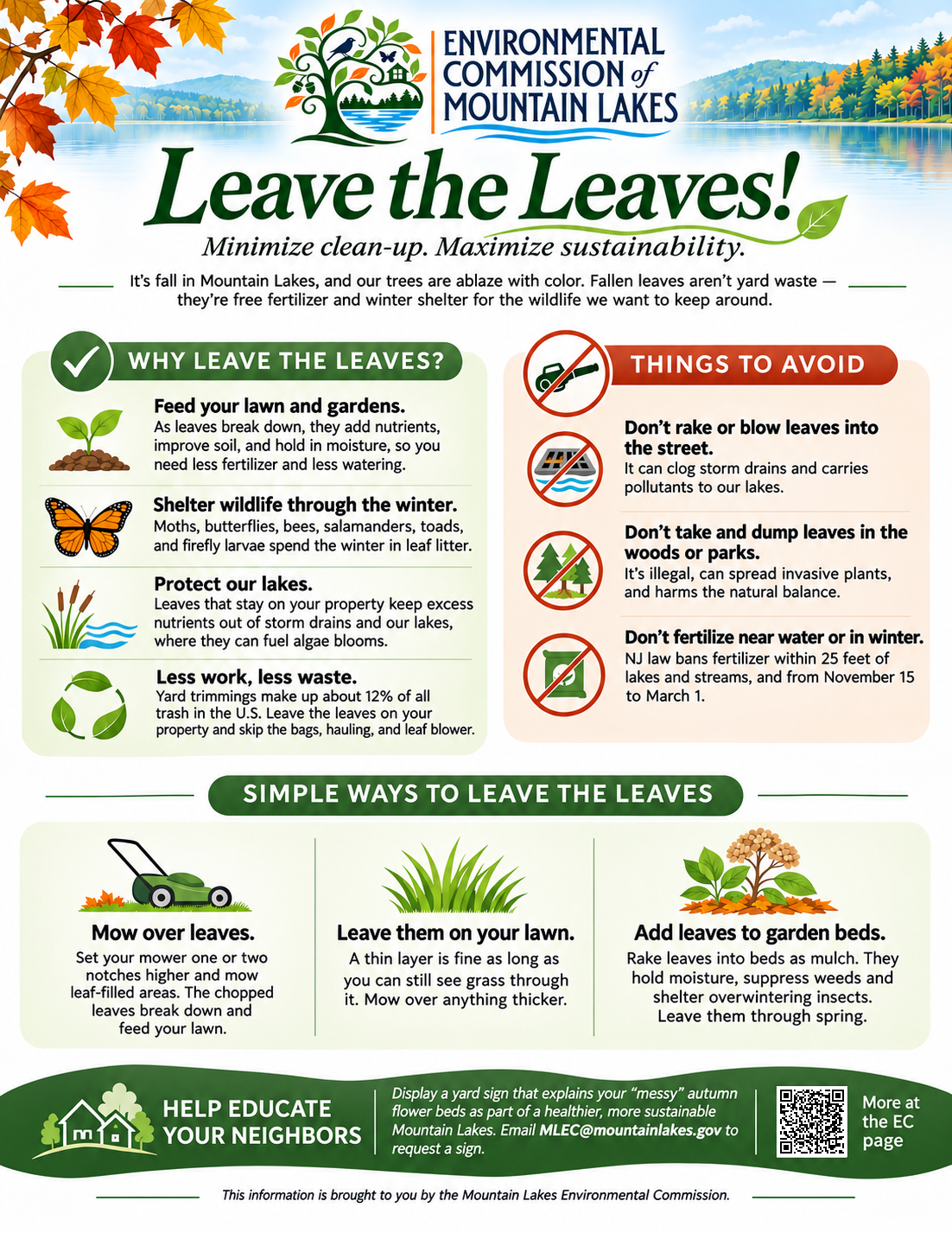
Leave the Leaves
Fallen leaves aren’t yard waste. They’re free fertilizer and winter shelter for the wildlife we want to keep around.
- They feed your lawn and gardens. As leaves break down they add nutrients, improve the soil and hold in moisture, so you need less fertilizer and less watering.
- They shelter wildlife through the winter. Moths, butterflies, bees, salamanders, toads and firefly larvae spend the winter in leaf litter. Those caterpillars are what most backyard birds feed their young in spring.
- They protect our lakes. Leaves blown or left in the street wash into the storm drains, and every storm drain in Mountain Lakes empties into our lakes, where decaying leaves add nutrients that feed algae blooms.
- Less work, less waste. Yard trimmings make up about 12% of all trash in the U.S. Leaves you keep on your property never need bagging, hauling or a leaf blower.
So this fall, skip the raking. Mow leaves into your lawn on the highest mower setting, leave them in your garden beds until a single clean-up in March, and never blow or dump them into the woods, pocket parks or the street. Borough rules also require leaves and grass clippings in the street to be bagged or contained.
Join the Discussion
We take up local environmental issues as they come up, and we want residents involved. Here’s what’s on our radar right now. If there’s something else you think we should look at, tell us.
On our radar · updated November 2026
AI Data Centers
Large data centers use a lot of electricity and often a lot of water for cooling. Dozens of New Jersey towns have banned or paused new ones, and a 2026 state law now requires data centers to report their energy and water use. We’re looking at what Mountain Lakes’ own zoning says about them.
Lake Encroachments
Borough rules limit what can be built or placed in and along our lakes, like private sand beaches, fill, walls and docks. This is mainly a topic for the Lakes Management Advisory Committee. Because shoreline changes affect water quality, it’s on our radar too.
Something else?
Tell us what you think we should look at: MLEC@mountainlakes.gov
Get involved: come to one of our meetings (third Wednesday of the month, 7:30 PM on Zoom) or email us.
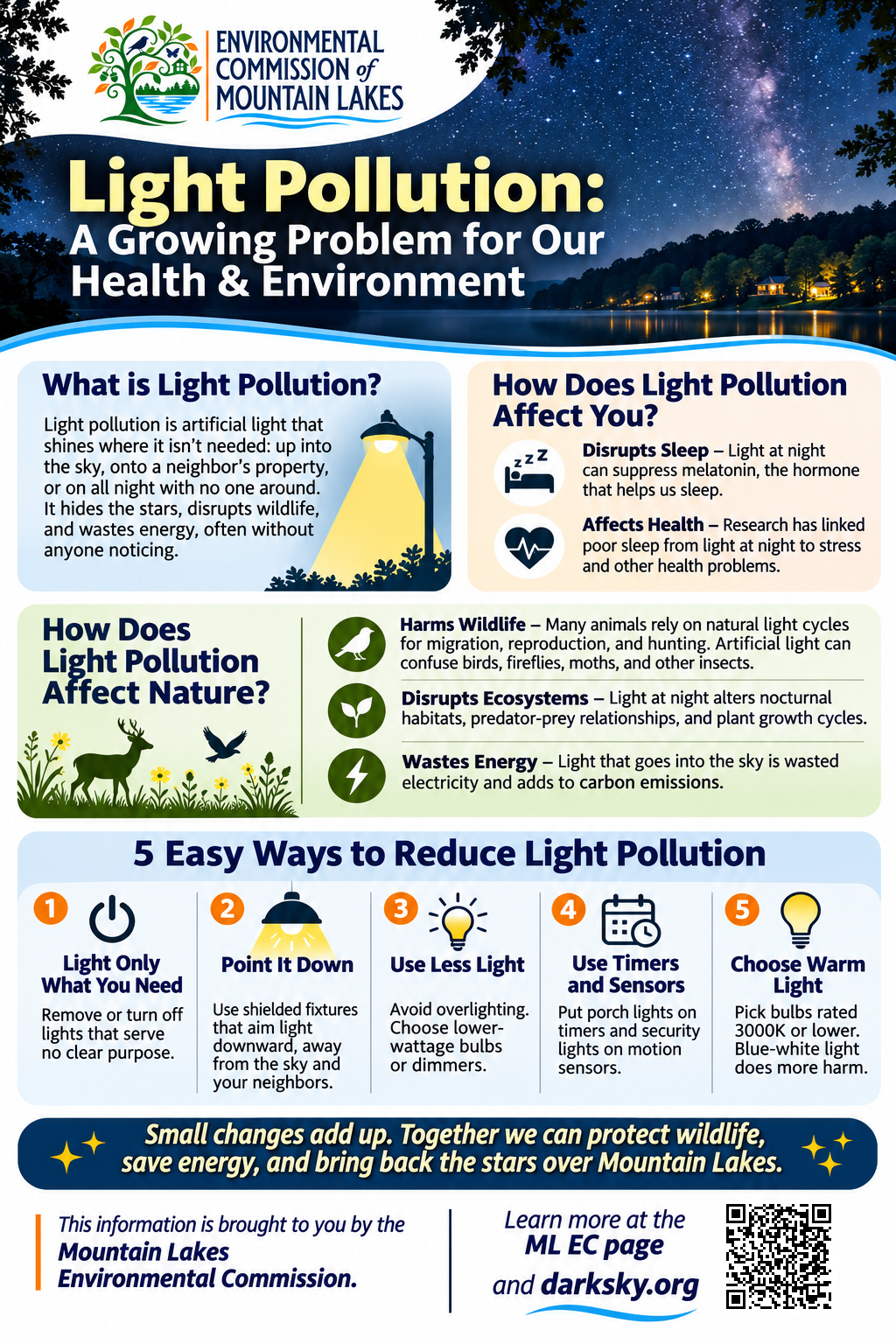
Dark Skies
Light pollution is outdoor light that goes where it isn’t needed: up into the sky, into a neighbor’s window, or on all night with no one around. It hides the stars, disrupts wildlife that depends on darkness, wastes energy, and can disturb our sleep.
Reducing light pollution is one of the commission’s goals for 2026. This year we brought Steve Mariconda of DarkSky New Jersey to the Mountain Lakes Library, worked with the school district on field and flagpole lighting, and started reviewing outdoor lighting around town.
A few easy steps at home:
- Use timers, motion sensors or dimmers so lights are on only when needed.
- Choose shielded fixtures that point down, and use warm-colored bulbs (3000K or lower).
- Turn off decorative and landscape lights at bedtime.
Impacts of Light Pollution flyer
Learn more: DarkSky New Jersey · DarkSky International outreach materials (a brochure, fact sheets and a home lighting checklist)
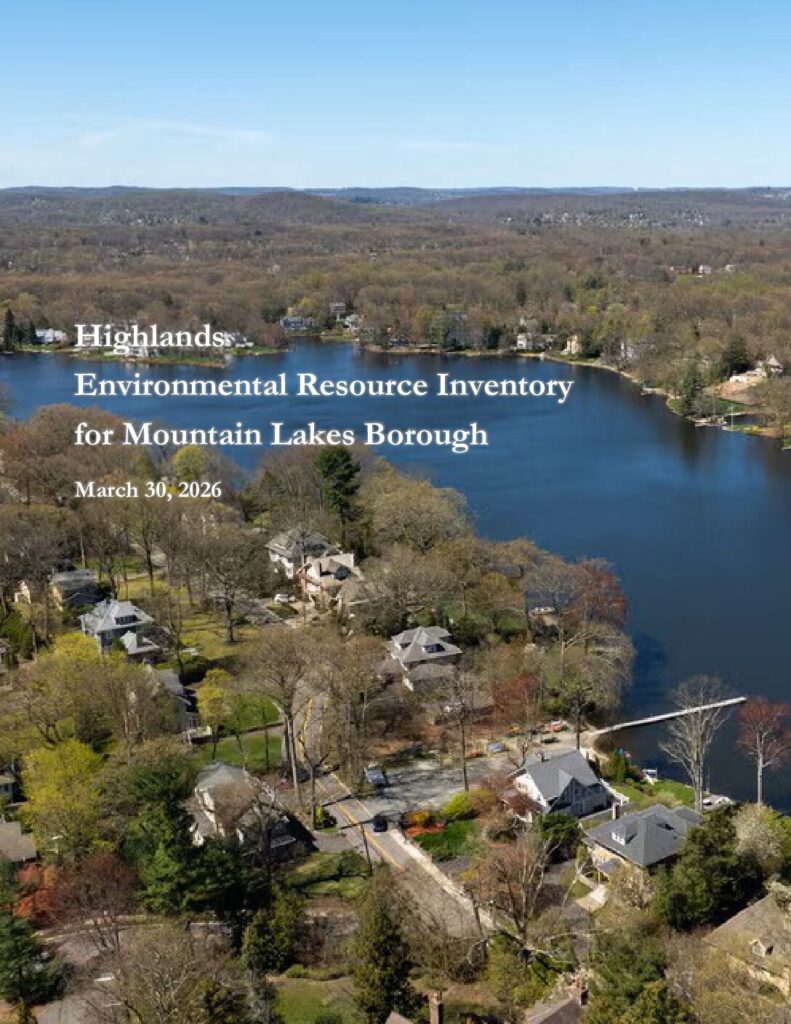
Environmental Resource Inventory
The ERI is an unbiased, objective report on all the environmental features and characteristics in Mountain Lakes. It integrates a variety of data from multiple sources to give the most comprehensive overview of natural and cultural resources, critical areas, existing development and infrastructure, as well as environmental challenges. The planning board, the zoning board and the commission use it when reviewing development proposals, and residents can use it to understand what’s around them.
It was updated in 2026 with the NJ Highlands Council (the last update was in 2012). Both are posted here so residents and boards can see how things have changed over the last decade.
Read the 2026 ERI Interactive ERI map
Previous edition: Environmental Resource Inventory, 2012 (PDF)
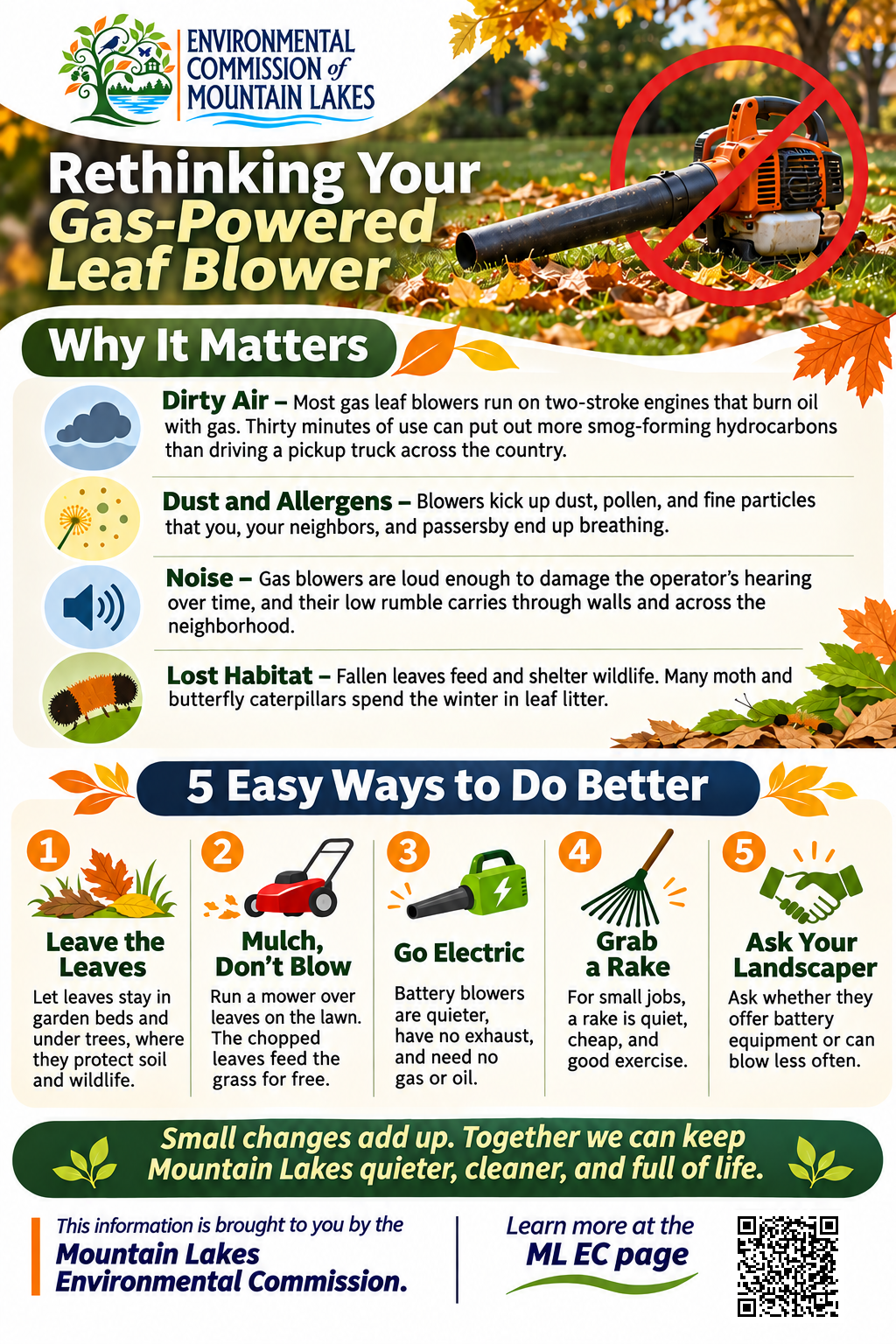
Quieter, Cleaner Yard Care
Gas-powered leaf blowers are among the loudest and dirtiest machines in town. California’s air regulators found that running a commercial gas leaf blower for one hour puts out as much smog-forming pollution as driving a new car about 1,100 miles. They’re also loud enough that the people running them need hearing protection, and the low drone carries across the neighborhood.
Battery-powered blowers and mowers are much quieter and give off no exhaust. And the more leaves you leave in place, the less you need a blower at all. If you hire a landscaper, ask whether they use battery equipment.
Cleaner Lakes and Stormwater
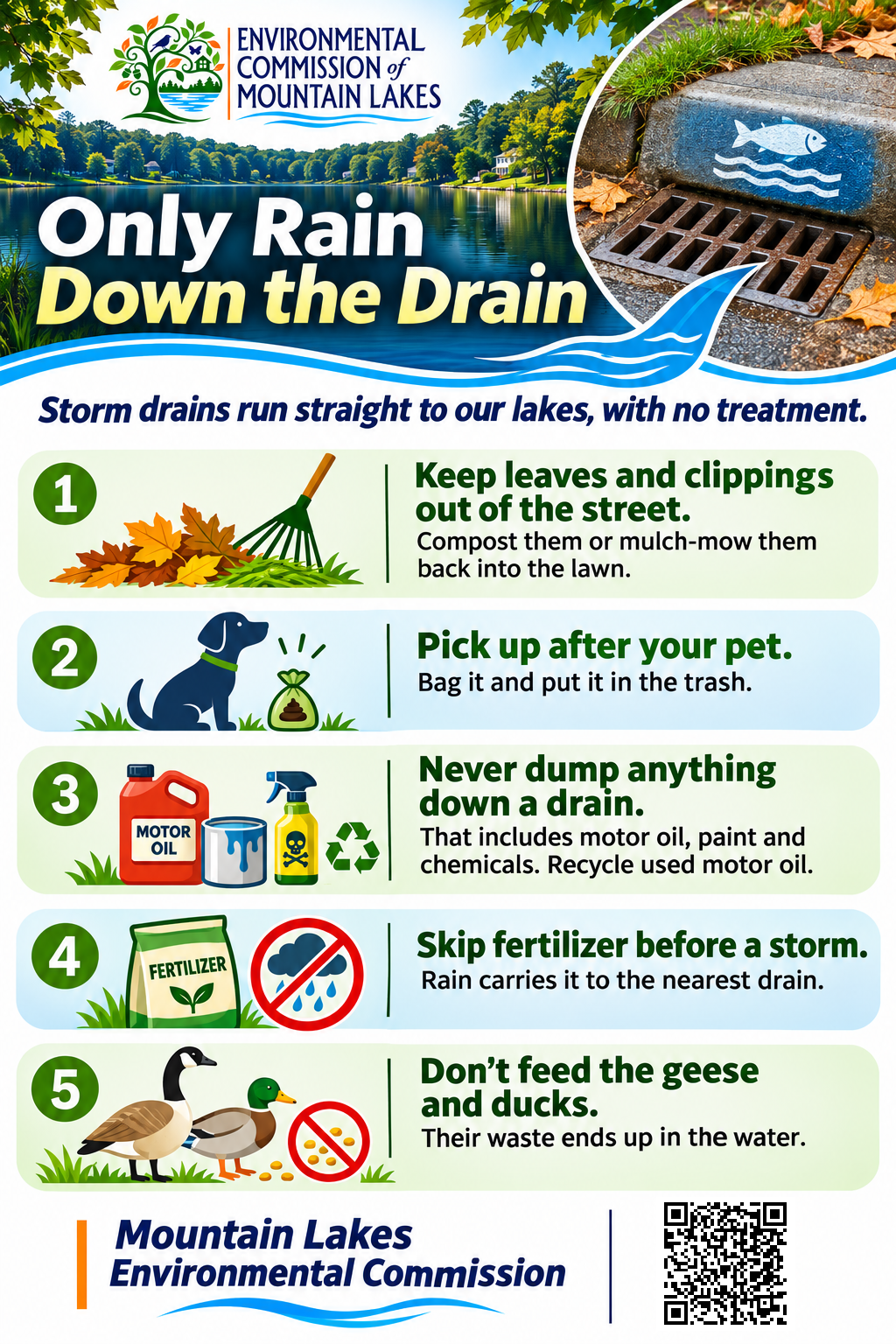
Every street catch basin in Mountain Lakes drains straight into our lakes. Whatever washes off our lawns, driveways and streets, including fertilizer, pet waste, leaves, oil and litter, ends up in the water we swim and boat in, and helps feed algae blooms. The borough works under a state stormwater permit, and residents make a big difference.
We work with the Lakes Management Advisory Committee to reduce stormwater runoff into the lakes, and we maintain and expand the Birchwood rain garden with student and Eagle Scout volunteers. The rain garden captures runoff from the beach parking area and lets it soak into the ground instead of flowing into the lake.
What you can do:
- Pick up after your pet and put the waste in the trash. Borough law requires it.
- Keep leaves and grass clippings out of the street. Mulch them into your lawn or bag them.
- Use organic, slow-release fertilizer, use less of it, and never fertilize within 20 feet of a lake or stream.
- Never dump anything into a storm drain. Only rain belongs there.
Anything that goes into a storm drain flows straight into our lakes, untreated. Leaves, pet waste, fertilizer and motor oil all end up in the water we swim and fish in. Our stormwater flyer lists five simple habits that keep them out.
Stormwater flyer Borough stormwater information
The borough’s stormwater page has the Municipal Stormwater Management Plan, the Stormwater Pollution Prevention Plan, a map of the storm sewer outfalls and the related ordinances.
Healthy Lawns
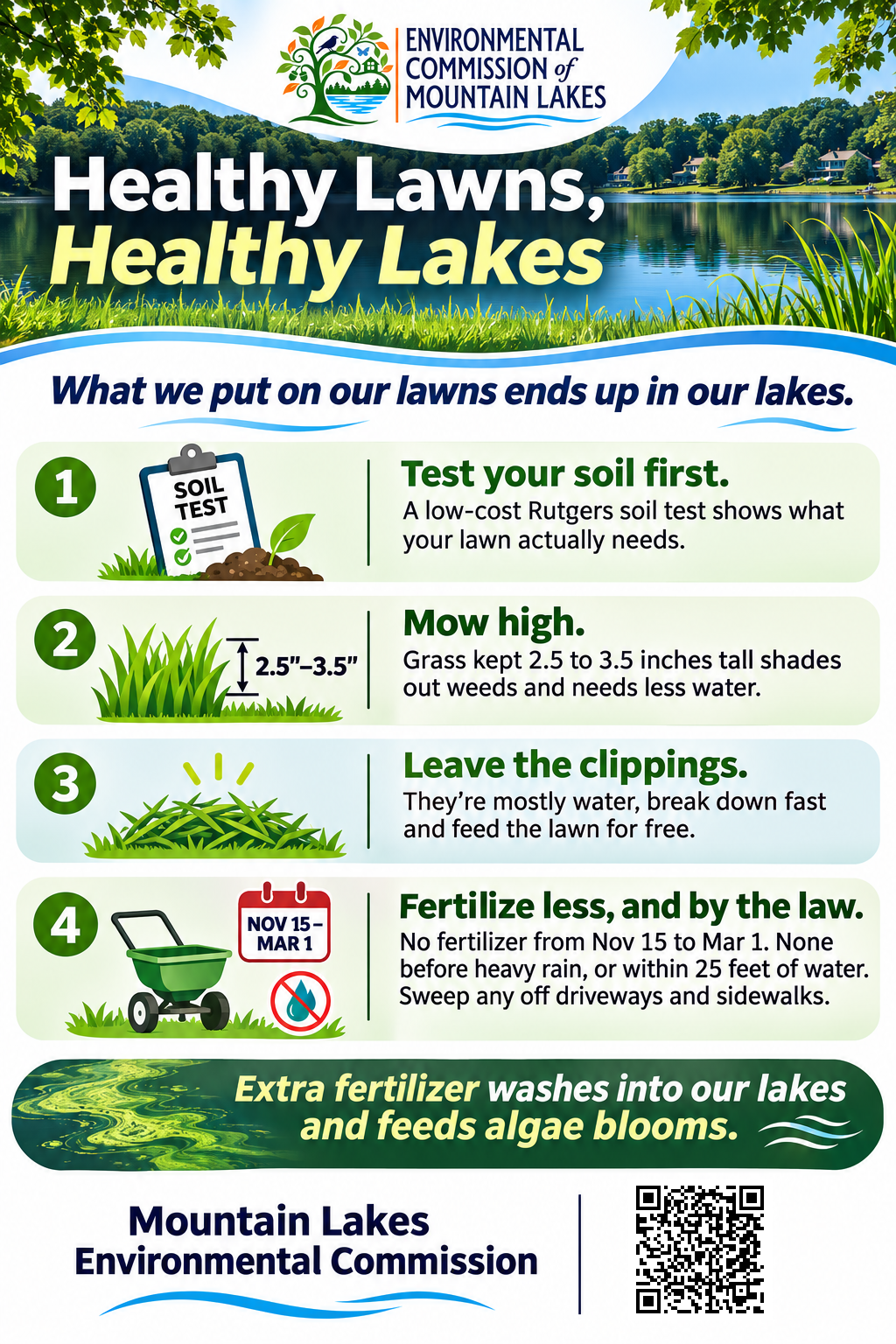
A healthy lawn doesn’t need much help. Fertilizer and chemicals that wash off yards feed algae blooms in our lakes. A soil test, mowing high and leaving the clippings do most of the work. New Jersey law also limits when and where homeowners can fertilize. Our flyer has the tips and the rules on one page.
Community Clean-Up Day
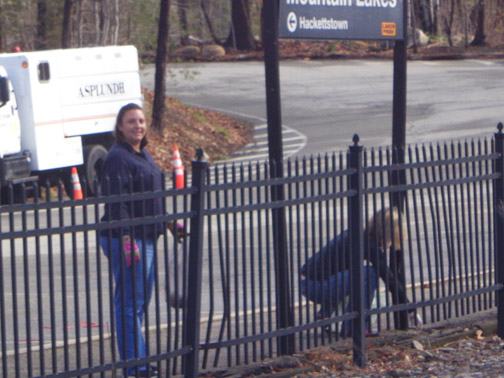
Every April the Environmental Commission hosts a town-wide clean-up. Pick up gloves, bags and grabbers at the DPW, then clean a street, park or lakeshore near you. High school students can earn community service hours, and school teams clean up around the high school. Families, scout dens and neighbors are all welcome; most people are done in an hour or two.
About 70 volunteers joined us on April 25, 2026, and filled dozens of bags with litter that would otherwise have washed into the lakes with the next storm. Watch this page in March for next year’s date and sign-up.